Latticeonirik
Delta Edition
Delta Edition
1. Problem Statement
When working with complex applications, developers need to examine not only the implementation of required functionality but also code behavior under different execution conditions. Increasing data volumes, operation counts, and component interactions can affect memory consumption and computation duration. Without systematic testing and diagnostics, identifying the causes of errors, delays, and unexpected application behavior can be challenging. Additional difficulties arise when analyzing asynchronous processes, managing resources, and comparing different algorithm implementations. Further C# study therefore benefits from considering performance, testing, and reliability as interconnected aspects of application development.
2. Solution
Delta Edition presents a structured examination of C# application testing, diagnostics, and performance analysis. The educational materials explain execution time measurement, memory usage investigation, and the identification of inefficient operations. Separate sections focus on unit and integration testing, exception analysis, profiling, and observing asynchronous component behavior. Practical examples demonstrate approaches to comparing implementations, examining programming logic, and studying component behavior under different workloads. This approach supports an organized understanding of diagnostic processes and technical decisions concerning resource usage and application behavior.
3. What's Inside
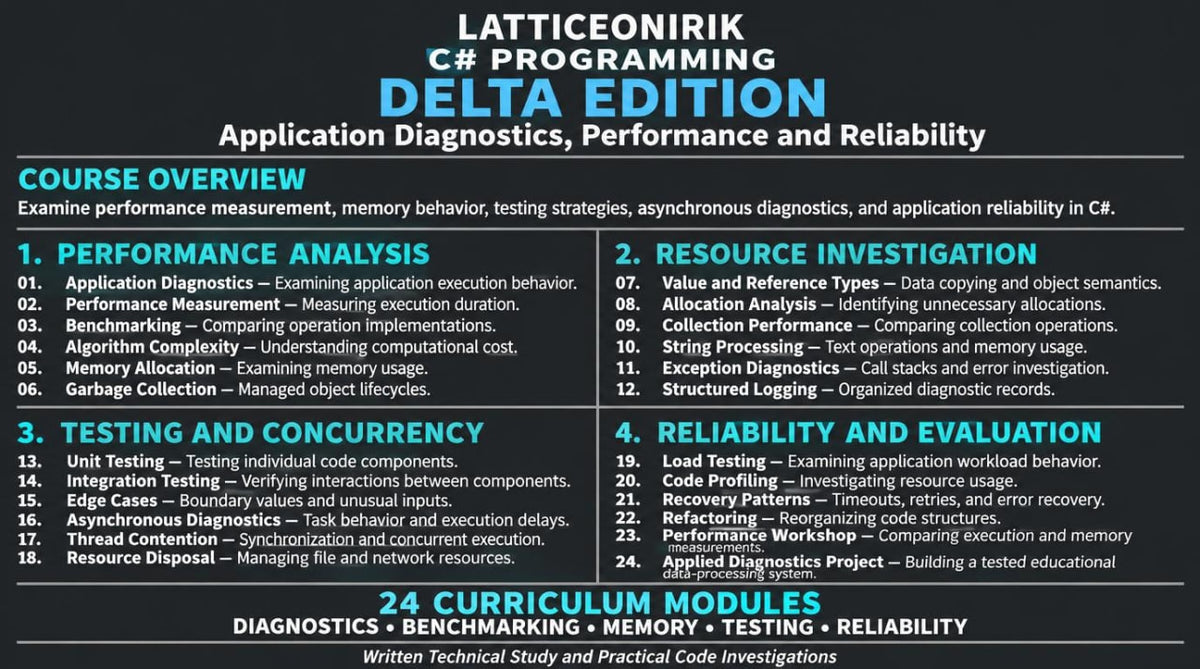
Module 1: Introduction to Application Diagnostics
Explore application diagnostics, execution monitoring, and approaches to identifying the causes of incorrect behavior.
Module 2: Performance Measurement Fundamentals
Study execution time measurement and the comparison of programming operation results.
Module 3: Benchmarking C# Operations
Examine controlled benchmark scenarios for investigating individual method performance.
Module 4: Algorithm Complexity Analysis
Explore computational complexity and how input data size affects the number of operations performed.
Module 5: Memory Allocation Principles
Study memory allocation, object placement, and the influence of programming constructs on resource usage.
Module 6: Garbage Collection Concepts
Examine automatic memory management, garbage collection behavior, and managed object lifecycles.
Module 7: Value Types and Reference Types
Compare value types and reference types in relation to data copying and object allocation.
Module 8: Reducing Unnecessary Allocations
Explore identifying unnecessary memory allocations and comparing alternative implementations.
Module 9: Collection Performance Analysis
Study collection characteristics and the performance of search, insertion, and removal operations.
Module 10: String Processing and Memory Usage
Examine text processing, string creation, and approaches to organizing repeated textual operations.
Module 11: Exception Diagnostics
Study exception analysis, call stacks, and identifying sources of programming errors.
Module 12: Structured Logging
Explore structured diagnostic records and organizing information about application execution events.
Module 13: Unit Testing Strategies
Examine unit tests for individual methods, classes, and programming rules.
Module 14: Integration Testing
Study component interaction testing, data exchange verification, and layered application behavior.
Module 15: Test Data and Edge Cases
Explore test dataset preparation, boundary values, and unusual execution scenarios.
Module 16: Asynchronous Performance Diagnostics
Examine asynchronous task behavior, execution delays, and parallel operation coordination.
Module 17: Thread Contention and Synchronization
Study thread contention, locking mechanisms, and the effects of synchronization on execution duration.
Module 18: Resource Management and Disposal
Explore the management of file, network, and other resources requiring orderly disposal.
Module 19: Load Testing Concepts
Study simulated workload levels and application behavior during numerous concurrent operations.
Module 20: Profiling and Performance Investigation
Examine profiling principles, resource usage analysis, and identifying code sections for further investigation.
Module 21: Reliability and Recovery Patterns
Explore execution timeouts, operation retries, and recovery from anticipated errors.
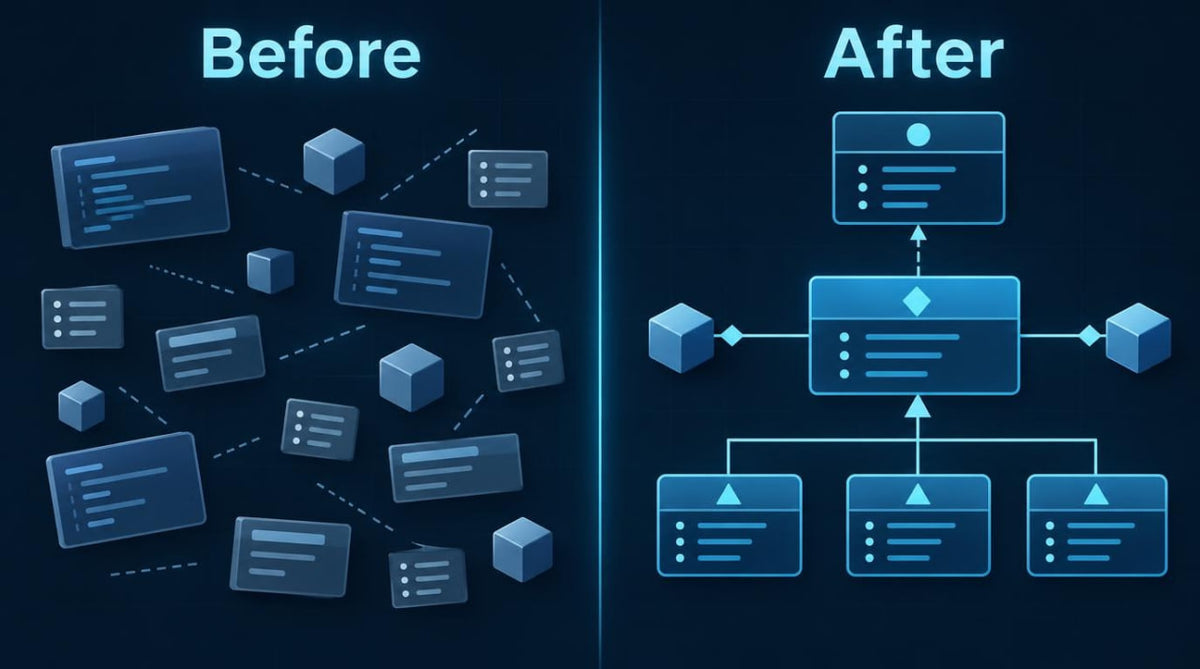
Module 22: Refactoring for Maintainability
Study code structure revisions, reducing duplication, and organizing understandable programming components.
Module 23: Performance Evaluation Workshop
Compare several implementations of programming operations based on execution time, memory allocation, and behavior under different conditions.
Module 24: Applied Diagnostics and Testing Project
Develop an educational data-processing system incorporating unit tests, diagnostic records, performance measurements, and memory usage analysis.
4. Who Is This For?
✅ Suitable if you:
- Already understand object-oriented programming in C#.
- Are familiar with asynchronous execution and collections.
- Want to study application diagnostic methods.
- Are interested in performance and memory analysis.
- Would like to examine component testing principles.
- Want to understand garbage collection behavior.
- Are interested in investigating execution delays and errors.
- Prefer written learning materials with practical code investigations.
❌ Not for you if you:
- Are beginning C# studies.
- Have not yet explored methods, classes, and collections.
- Need an introductory syntax course.
- Want materials focused exclusively on graphical interface construction.
- Are interested only in theoretical programming discussions without practical examples.
- Expect individual instructor-led sessions.
- Have not studied fundamental asynchronous programming concepts.
5. What You'll Learn
- Application diagnostics.
- Performance measurement.
- Algorithm complexity analysis.
- Memory management.
- Garbage collection.
- Collection performance.
- String processing.
- Exception analysis.
- Structured logging.
- Unit testing.
- Integration testing.
- Asynchronous operation analysis.
- Thread synchronization.
- Load testing.
- Code profiling.
- Reliability analysis.
- Component refactoring.
6. Refund Terms
Delta Edition is subject to the refund conditions outlined in the published Latticeonirik store policy. Refund requests submitted within 14 days are reviewed according to the store's published terms, digital educational material delivery conditions, and applicable legislation. We recommend reviewing the complete refund policy before placing an order.
7. Certificates
Delta Edition — After completing Delta Edition, you receive a certificate documenting your study of distributed application architecture and service integration.
Self-paced learning overview
- 📄 Digital file available after purchase
- 📚 Long-term availability
- 🔒 Secure checkout
- 📅 Content updated in 2026
Couldn't load pickup availability
What Format Are Latticeonirik Courses Provided In?
What Format Are Latticeonirik Courses Provided In?
Our courses are presented as written PDF educational materials. They contain thematic sections, explanations of C# concepts, programming code examples, and practical exercises. Each course follows a structure appropriate to its subject matter and intended learning stage.
How Do the Courses in the Collection Differ?
How Do the Courses in the Collection Differ?
Each Latticeonirik course focuses on a distinct group of topics and learning activities. Introductory sections examine C# fundamentals, while subsequent materials gradually move toward data handling, object structures, programming logic, and code organization. The specific curriculum of each course is outlined in its description.
Share